The Last King of Soviet Roads: The Remarkable Story of the ZIS-127 and Its Journey from Moscow to Estonia
Built in Moscow under Stalin, driven for more than one million kilometres, destined for the scrapyard, and ultimately rescued by an Estonian transport enthusiast. The story of the legendary ZIS-127 bus is a tale of Soviet industrial history, Estonia’s past, and a remarkable piece of transport heritage that very nearly disappeared forever.
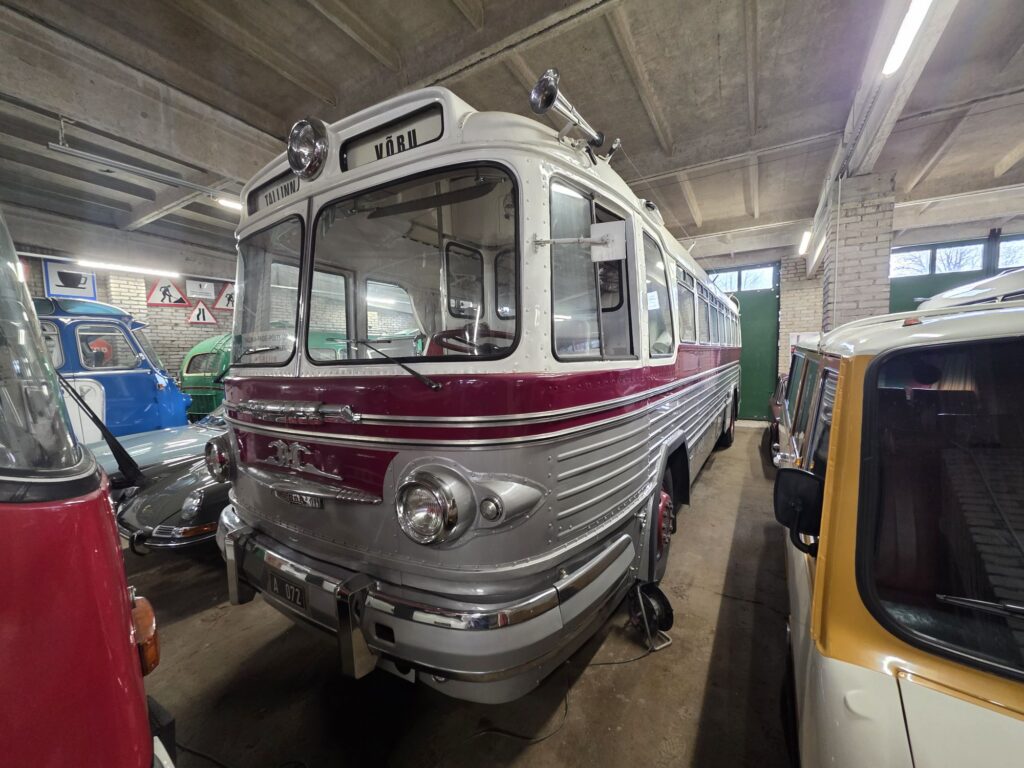
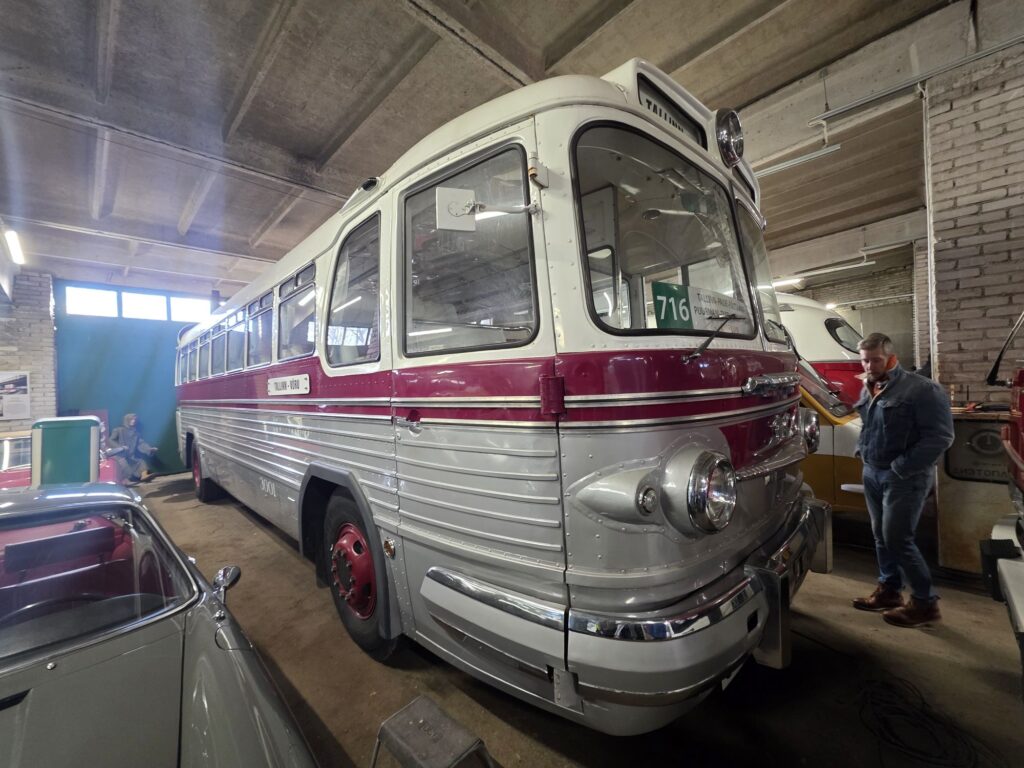
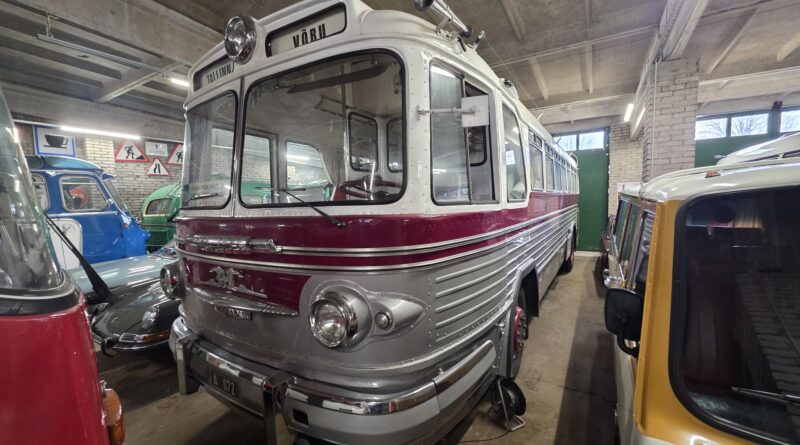
The first thing that catches your eye when looking at this large, silver-coloured bus with its distinctive burgundy stripe is its design. It looks more like an American Greyhound coach from the 1950s than what one would normally associate with Soviet vehicle production. But this is no American vintage bus. It is a ZIS-127, one of the most famous and rare long-distance coaches ever produced in the Soviet Union.
One of the Soviet Union’s most important vehicle manufacturers
The story begins in Moscow in 1956, at the Stalin Factory, Zavod Imeni Stalina, abbreviated to ZIS. The factory was named after Joseph Stalin and was one of the Soviet Union’s most important vehicle manufacturers. The country was undergoing a period of extensive industrial development, and the authorities wanted to demonstrate that the Soviet Union could compete technologically with the West.
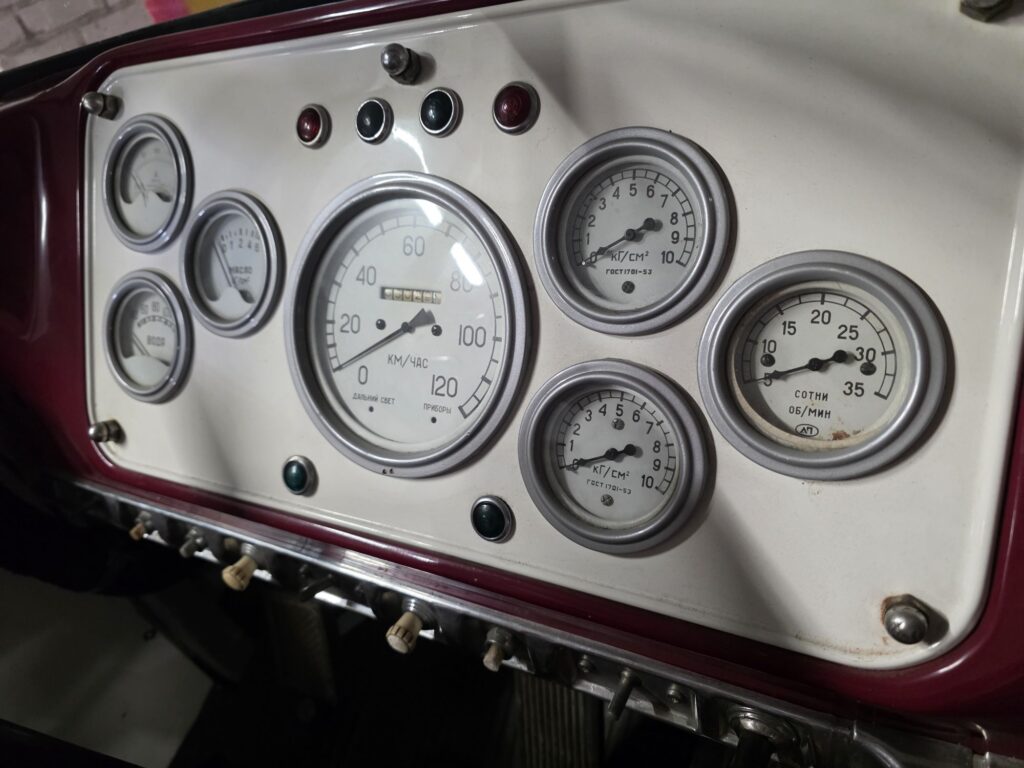
The ZIS-127 was a visible expression of that ambition. It was designed specifically for long-distance travel and represented a significant technological advance compared with many ordinary buses of the time. Its styling was clearly inspired by American intercity coaches, particularly Greyhound models, with large panoramic windows, a rounded front, extensive use of metal and an elegant, streamlined body.
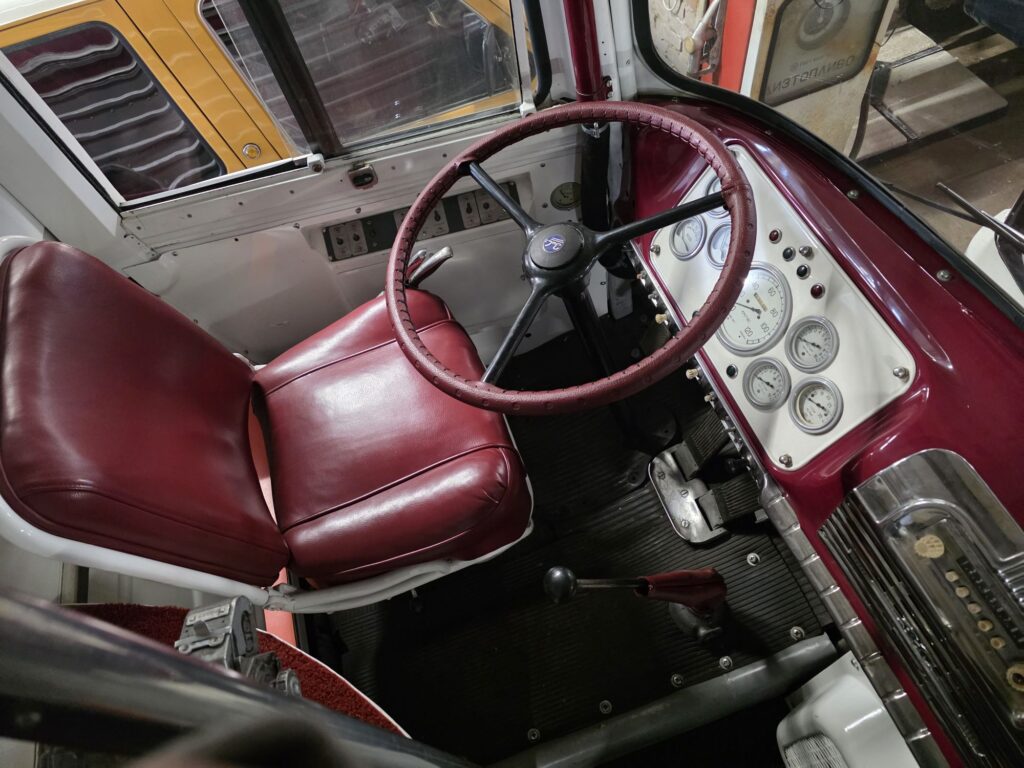
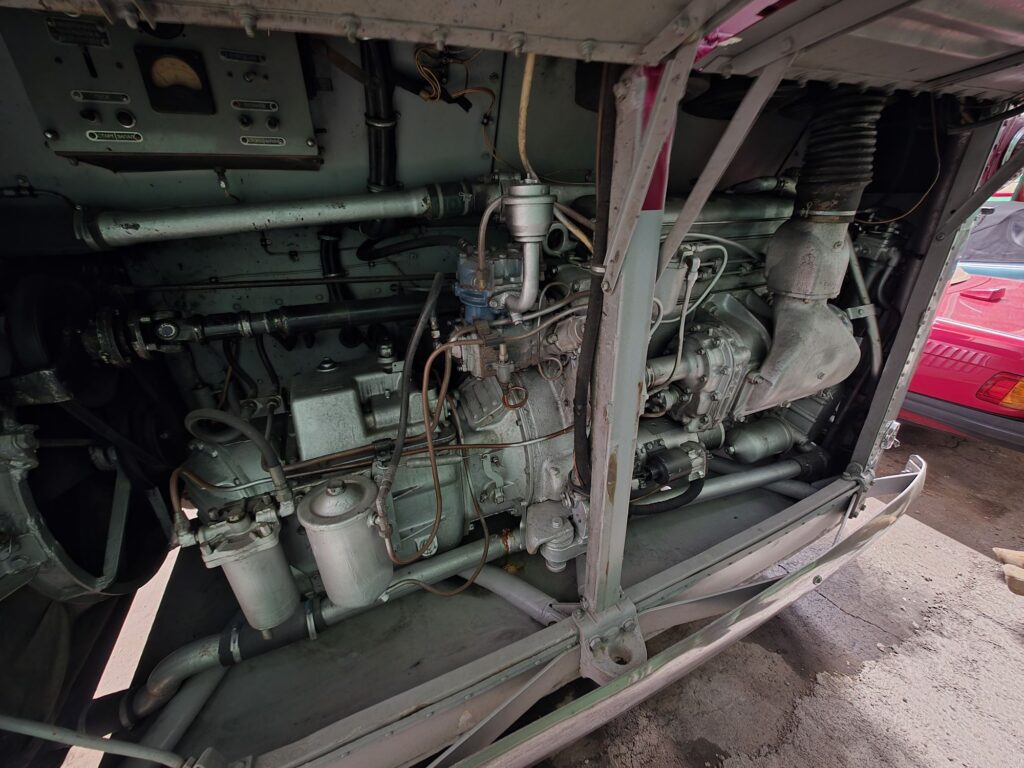
Even the engine was a copy of an American six-cylinder, two-stroke diesel engine with a supercharger. The engine was mounted transversely at the rear, with a manual gearbox and an angle-drive transmission transferring power to the rear axle.
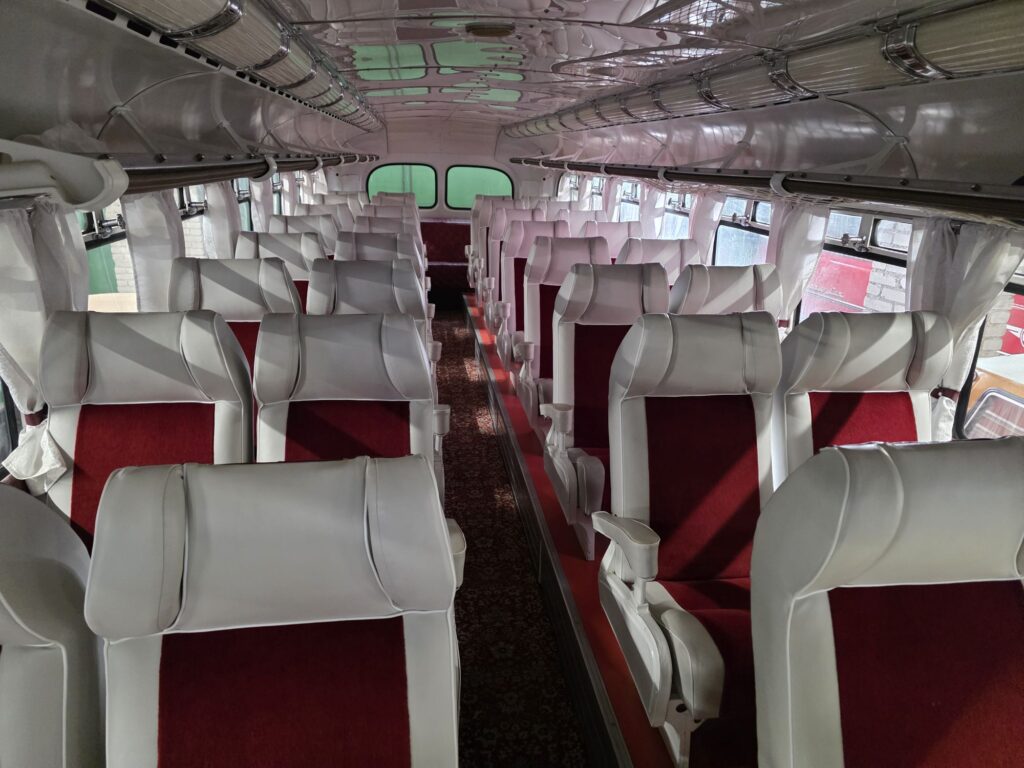
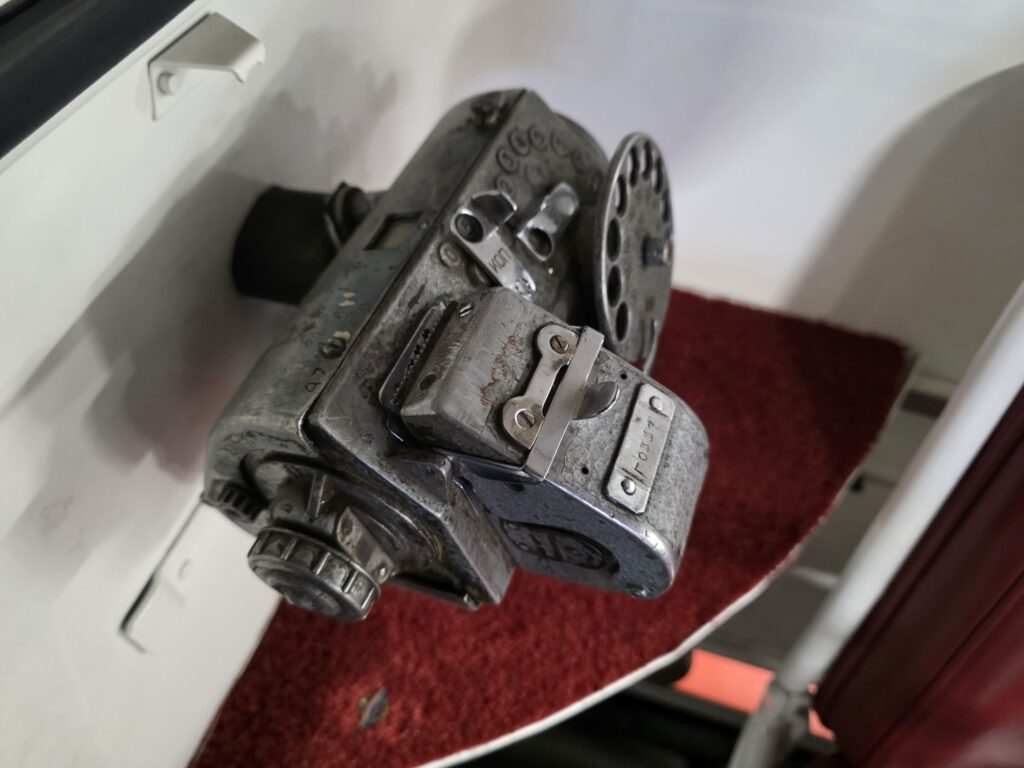
The bus could accommodate 32 passengers and was equipped with luggage compartments beneath the passenger cabin. It was approximately ten metres long and offered a level of comfort and design that made it a flagship of Soviet bus transportation. At 2.7 metres wide, it was built to accommodate genuine aircraft-style seats with armrests. Only 851 examples were produced, making the model exceptionally rare even by international vintage vehicle standards.
Only one example has survived
The particular example now owned by the Estonian transport group Mootor Grupp first entered service in 1956. It was initially operated in Leningrad, now St Petersburg, and ran, among other routes, between Leningrad and Tallinn. From an early stage, it therefore became part of the transport connection between Russia and Estonia.
The bus had a hard working life. Long-distance driving placed considerable demands on the vehicle, and after covering more than one million kilometres, it was sent to Vyborg in 1965, with dismantling intended to be its final destination. For most vehicles, this would have marked the end. But this particular ZIS-127 was destined for a very different future.
Instead of being completely scrapped, it ended up in Estonia, where it was put into service by a collective farm in Kuusalu. According to local stories, two buses were saved from the scrapyard with the help of a couple of bottles of spirits and a friendly conversation.
In Estonia, it began a new life as a working vehicle. Its original role as a modern express coach was long gone, but its body and basic structure survived. This would later prove crucial in making its restoration possible.
Acquired by the SEBE company in 1998
Over the following decades, the bus passed through various Estonian transport operators, including companies in Tartu and Pärnu. From 1998 onwards, it was associated with the bus company SEBE. By the time the Soviet Union had collapsed and Estonia had regained its independence, the bus had acquired a new historical identity. Originally a product of Soviet industry, it had spent much of its life as part of Estonia’s transport history.
The turning point came in 2008. Estonian transport entrepreneur Hugo Osula, owner of Mootor Grupp, was given the opportunity to purchase the old bus. Osula had a keen interest in transport history and recognised that this was a vehicle worth preserving. Its condition, however, was extremely poor. It could no longer move under its own power, and a complete restoration would require considerable financial resources, technical expertise and access to historical documentation.
Nevertheless, Osula decided to save it.
A collaboration between Busland and SEBE
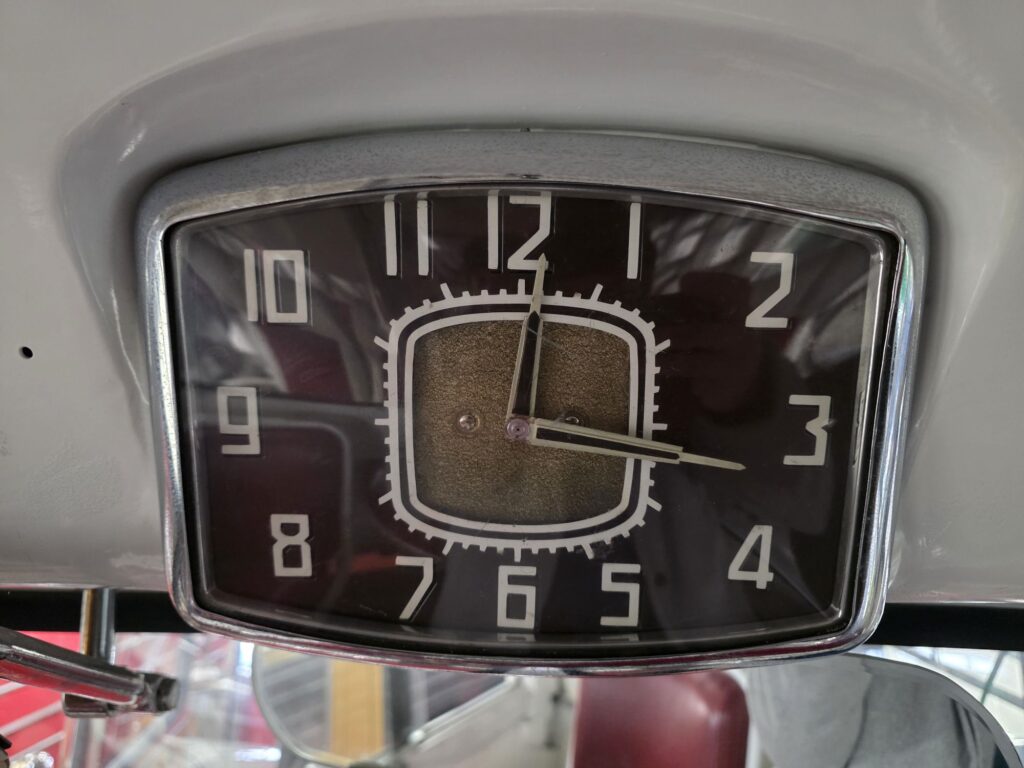
The restoration was carried out in cooperation with, among others, Busland and SEBE. It proved to be a major undertaking lasting approximately three years. This was not simply a matter of repairing an old bus and giving it a fresh coat of paint. The ambition was to return the vehicle to its original specification, allowing it to stand as an authentic example of Soviet bus manufacturing from the 1950s.
Historical drawings and technical documentation had to be obtained, and information was sourced from Russian archives. Considerable work was required to reconstruct details and find solutions consistent with the original design. The result was an extensive restoration that brought the old ZIS-127 back to its former glory.
In 2011, the restored bus was presented to the public in Tallinn. It attracted considerable attention, not least because it was an exceptionally rare vehicle that many had assumed was lost forever. The bus became an important addition to Estonia’s collection of historic transport vehicles and a living monument to an era when bus manufacturing was an important part of the Soviet Union’s industrial prestige.
Russia takes an interest in this historic vehicle
Interest in the bus did not stop at Estonia’s borders. There was also considerable interest in Russia in seeing the restored vehicle. In 2011, it was invited to Russia by the Russian Ministry of Transport to be displayed as a historical and technological treasure. Later, in 2016, it was exhibited in St Petersburg in connection with an anniversary celebration associated with the city’s bus terminal. Hugo Osula attended personally, and the bus attracted attention as a unique example of Soviet transport history.
Russia wanted the bus back
It is this Russian interest that has contributed to the story that Vladimir Putin wants the bus returned to Russia. This remains a rumour, but there is documentation showing that Russian authorities have wanted to exhibit the bus and that it has been invited to Russian events. Senior figures in Russia have personally approached Hugo Osula with requests for the bus to return to its country of origin.
It is nevertheless easy to understand why the bus attracts such interest in Russia. The ZIS-127 was no ordinary bus. It was a prestige project from an era when the Soviet Union wanted to demonstrate its technological and industrial capabilities to the world. The fact that one of the last surviving examples is now located in Estonia gives the vehicle an additional historical significance.
For Estonia, the story is also interesting for another reason. The bus represents a period when the country was part of the Soviet Union, and when transport, industry and infrastructure were closely connected to Moscow. Following independence in 1991, Estonia gained the opportunity to preserve its own history and cultural heritage. The ZIS-127 has become part of that history, even though it was originally built in Russia.
Perhaps the most remarkable thing of all is that the bus survived. It was manufactured in Moscow, driven for more than one million kilometres, sent for dismantling and eventually ended up as a working vehicle on an Estonian collective farm. It survived decades of use, political upheaval and changes of ownership. Finally, it was rescued by an Estonian transport enthusiast who understood its historical importance.
Without Hugo Osula’s decision in 2008 and the extensive restoration work that followed, this piece of European transport history might have been lost forever.
Today, the restored ZIS-127 stands as a rare testament to a bygone era. It tells the story of Soviet industrial ambition, the historical links between Russia and the Baltic states, and how a vehicle can survive long beyond its original working life.